Background: The Metroid franchise took a surprising turn when Retro Studios announced that their addition to it in the form of Metroid Prime would be in the style of a 3-d first person shooter. Long time fans of the series were outraged and extremely skeptical. People were questioning how Metroid’s back-tracking puzzle based gameplay would translate into 3-d. They had notions of Retro Studios turning it into a run and gun style FPS, which helped give it the title of “Halo-killer” before it was even released. It turns out that when the game was finally released in November of 2002, all of that skepticism went away and the gaming world was taken by storm.
Story: While I don’t believe that a bad story can completely ruin a game, a good story can certainly make a good game great. The story of this game isn’t that difficult to understand. The beginning premise is that Samus finds a distress signal coming from a deserted space vessel and in doing so uncovers secret experiments of a highly technological race of creatures. The unique thing about this game’s story is how you go about figuring it out. Instead of getting fed millions of 10 minute long cut-scenes ala the newest Metal Gear games or Final Fantasy, you are given a Scan Visor which is used to learn about the surroundings. You can scan EVERYTHING in this game, and if you want to get the most out of the story and atmosphere it is highly recommended that you do. While this may seem like a humongous chore, (it most certainly can be), if you actually read the scan logs that you collect it will make the atmosphere truly come to life. Some scans tell about the life of the Chozo, a sentient race that called the planet their home before the space pirates arrived. Others tell of the nasty experiments and their results that the space pirates are taking part in. And some scans will even be useful in forewarning you of the dangers to come. It’s a very unique system that may be tedious at times but it most certainly works. Overall 9.0/10
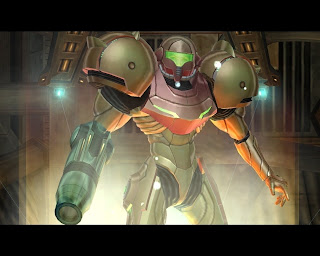
Graphics: The very first thing you’ll notice about this game is that the graphics are stunning. Now, this game came out almost 9 years ago, however if the game were released today it still would look pretty darn good. The environments that you explore are extremely detailed, Samus and her powersuit are textured beautifully and the developers even included many subtle graphical spectacles such as how mist will fog up your visor when you walk past a steam vent. The enemies all look very lifelike in the way they move and attack, and some of the bosses just look very intimidating. One hiccup in the graphics department is the lava, which actually looks like no effort was put into programming it. While it does look very hot to the touch, I could honestly take a red and orange crayon and draw the lava found throughout the game myself. Overall, 9.8/10
Sound: I want to begin this subsection by saying that I have the entire soundtrack for this game in my iTunes library right now. In fact, lately I’ve been listening to a couple of the songs daily when I need a good refresher. Basically, the music in this game fits perfectly. Every atmosphere is accompanied by a fantastically paired soundtrack and when it comes time to do battle, well there are songs for that too. After you beat the game, many of the songs WILL stick with you.How many games that come out nowadays can you say the same for? Not too many. The weapons sound like they should, the roar of some of the game’s larger enemies will strike fear into your heart, and the rewarding sound that accompanies the finding of a missile expansion will always give you hope. Overall, 9.6/10 (.4 off because that Phazon Mines theme still gives me nightmares).
Here's the menu theme. This song means business
Gameplay: Ahhhhh gameplay, the most important aspect of any game. I’m looking at you Crysis, get your fancy shmancy graphics out of here. Basically, this is where the skepticism lay before the game was released. This game isn’t a true FPS, and it’s certainly not an RPG (though you’ll be doing a lot of collecting). It basically has many elements and combines them brilliantly.
FPS’ing: Yes, the game looks at first glance like an FPS. However it controls nothing like your typical run of the mill style shooter. Instead of moving with one control stick and aiming with the other, you’ll be moving and turning all with the left control stick. The aiming system is a bit complicated, however after the first 10 minutes of playing you’ll become fluid with it. In order to aim you must press the R button and then use the moving control stick to look around. However, Samus has the ability to lock on to enemies, and trust me when I say you’ll be using this all of the time. At first the system is awkward but it works wonders the more you play the game. Fighting using this control style is actually quite rewarding. You’re probably thinking, “Oh well if I can lock onto enemies where’s the skill in that?” My reply would be to go fight the Omega Pirate, die, die some more and then we’ll see how much skill it takes. Pummeling enemies efficiently comes more from knowing (and scanning) their weaknesses and utilizing the guns you have at the right time to take them down before they deplete that last remaining energy tank.
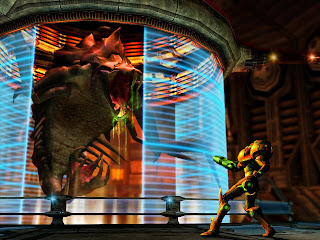
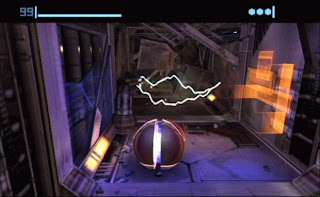
ADVENTURING: This game forces you to explore, and explore, and explore some more. In doing so, you will be exploring very interesting environments using the abilities you have gathered over your adventure. This does (in the style of Metroid) require a fair amount of back-tracking. HOWEVER, at no point does this truly become tedious. The rooms you go through will at first glance have a lot of secrets that you cannot reach (and many hidden ones), so when you do go through the same rooms multiple times it’s always with a new ability that will let you get to those secrets. This creates a very rewarding experience and when you do inevitably see those abilities being put to use, it’s amazing how much detail actually went into the layout of the game world. If you think you’ve exhausted every last corner of the world, trust me you haven’t. In fact, there are so many hidden secrets that it would be pretty much impossible to find every single item without the use of a guide. This game also has many environment-based puzzles. One of the major players in the puzzle department is Samus’ trusty Morph Ball upgrade. At the press of the X button Samus will roll into a small ball and be able to roll around quickly, bomb jump into the air, and eventually cling to special magnetic tracks. This actually makes for some very entertaining physics based puzzles. You’ll be pseudo-skating up and down half-pipes to reach unreachable ledges, you’ll be clinging to walls and bomb-jumping where you wouldn’t be able to go normally. It’s a whole lot of fun, and even after multiple playthroughs of the game there are still some puzzles that put my Metroid skills to the test.
CHALLENGE: Some games are so hard that they require a bazillion retry’s just to get past a boss or some tricky platforming. Others are so easy that a one armed (finned?) platypus could beat them. The truth is, this game falls right smack dab in the middle. A lot of this game is exploring, and a lot of the exploring in this game comes at a fairly easy pace. You won’t (for the most part) be pressed by a time limit at any point and you’ll be able to pretty much explore at will without too many hindrances. There are some difficult puzzles but they certainly don’t require mashing the restart button to complete. A little bit of thinking goes a long way in this game. There are a couple of difficult boss fights in this game, especially for a new player. One of which, the Omega Pirate, may have you screaming for mercy for a while. Fortunately there is a save point right before his room and with a little practice he goes down fairly easy. All in all, the game is highly beatable without too much frustration (it’s no Battletoads) but it does provide enough challenge to force you into being involved with the game. Oh, I forgot to mention, there is a Hard Mode that becomes unlocked after beating the game once. If you want a real challenge, give that a try.
Basically, the gameplay for Metroid Prime can be broken down into a few parts. You will explore, figure out interesting puzzles, fight some baddies, and become immersed in the mind-blowing world that Retro Studios has created. Overall, 9.9/10
Replayability: I know what you’re thinking, “replayability for a single player game? That’s nonsense.” This may be true for your precious Halo or Gears of War, but the fact is there is SO much stuff to do and find in this world that it’s only natural to want to go back after beating the game and explore every nook and cranny. There are probably a hundred or so suit upgrades and expansions to discover, and there are special endings and galleries to unlock when you get certain completion percentages. But really, the game is just so fun and rewarding that there’s a good chance you’re going to want to be immersed in the world all over again. Personally, I’ve been through the game a good 3 or 4 times and I loved every minute of it. Overall, 8/10
The Whole Package: It may seem like I’m very biased hearing all this praise about a single game. However, it’s just that good. It’s a long game on the first playthrough that will not disappoint. The graphics, sound, and gameplay all come together with the story to provide an exceptional atmosphere that will drag you away from reality while you play. If you own a Wii (doesn’t everyone?), get a copy (it’s like 4 bucks now used) and a gamecube controller (which is also amazing) and play what is arguably the best game on the Gamecube and in my opinion one of the best of all time.
Overall, 9.8/10


